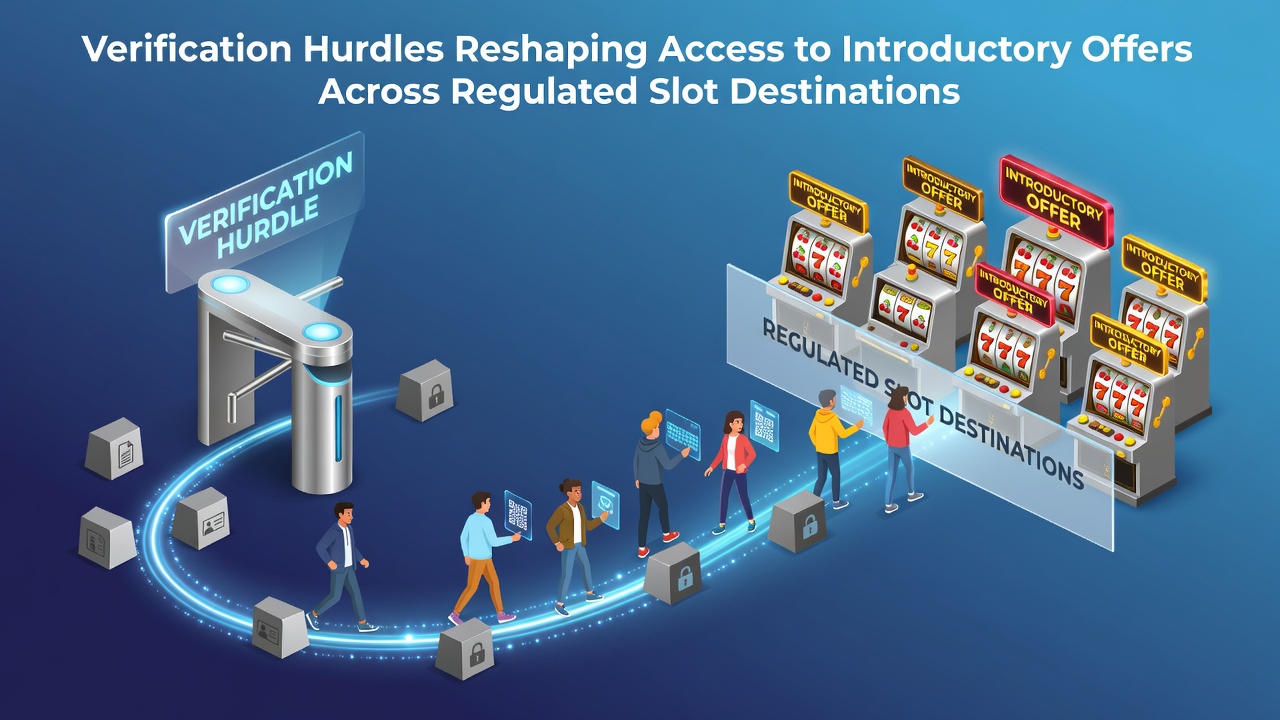
Verification Hurdles Reshaping Access to Introductory Offers Across Regulated Slot Destinations
Regulated slot platforms across multiple jurisdictions now require layered identity checks before players can unlock introductory offers such as matched deposits or free spin packages, and these steps often extend the time between registration and bonus activation by several hours or even days. Data from licensing authorities shows that operators must collect government-issued identification, proof of address, and sometimes source-of-funds declarations to comply with anti-money-laundering statutes that took sharper effect in many regions during 2025. Those who have studied player behavior note that the added friction leads a measurable share of new accounts to abandon the process before completing verification, which in turn reduces the number of users who ever reach the promotional stage.
How Identity Checks Interact with Welcome Mechanics
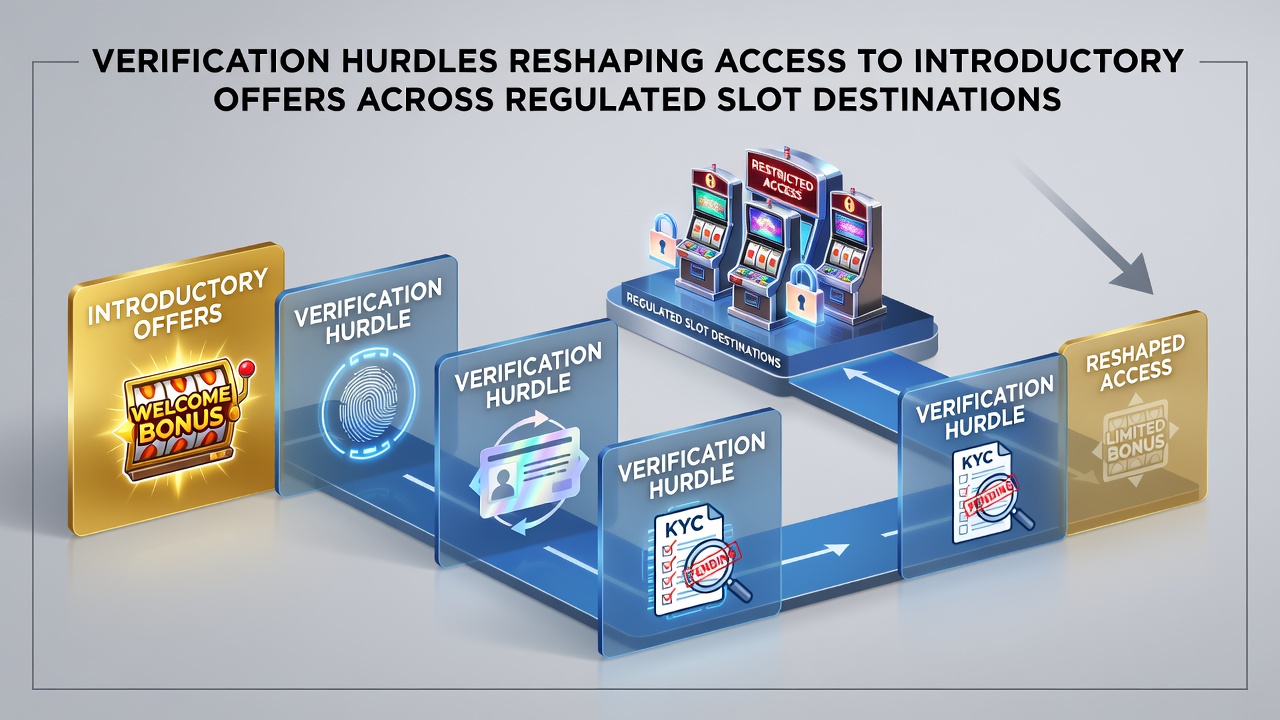
Introductory offers typically sit behind account approval gates because regulators in places such as New Jersey and Ontario mandate that every claimed bonus must be tied to a verified player profile. When a newcomer registers and selects a deposit match or free spin bundle, the platform pauses the reward until the uploaded documents receive manual or automated review, and this sequence now appears in August 2026 data releases from several state gaming boards. Observers note that operators have begun displaying clear progress indicators during the upload phase so users understand why their bonus remains locked, yet the same reports indicate that completion rates still vary significantly between desktop and mobile pathways.
Regional Differences in Verification Timelines
Markets that adopted digital identity solutions earlier, including certain Australian states and parts of Europe, tend to clear documents within minutes when facial recognition matches the submitted photo ID. In contrast, jurisdictions that still rely on manual review teams report average delays of twenty-four to forty-eight hours, according to figures compiled by the National Council on Problem Gambling. Players who attempt to claim offers during peak evening hours often encounter longer queues, and researchers have tracked corresponding drops in bonus redemption percentages during those windows. One study released in mid-2026 examined three thousand new accounts across two North American platforms and found that thirty-eight percent of users who started verification never finished it, directly correlating with zero bonus usage.
Operator Adaptations and Technical Workarounds
Platform providers have introduced staged verification models that allow limited play with small stakes while full checks continue in the background, and this approach satisfies both regulatory requirements and player expectations in several Canadian provinces. Some sites now pre-approve accounts through third-party services that already hold verified banking data, shortening the wait for introductory spins or deposit boosts. Industry reports indicate that these hybrid flows have lifted successful bonus activations by roughly fifteen percent on sites that implemented them before August 2026, although full adoption remains uneven across smaller operators. Those who have examined transaction logs point out that once verification clears, the bonus credits appear automatically without further player action, reducing support tickets related to missing rewards.
Impact on Player Acquisition Metrics
Marketing teams at licensed operators track how verification completion rates affect cost-per-acquired player, and recent internal figures reveal that campaigns promoting no-deposit spins suffer larger drop-offs than deposit-matched offers because the former attract more casual browsers who hesitate at document requests. Data shared by the Australian Communications and Media Authority in its 2026 quarterly summary showed that platforms offering instant small-value free spins after basic email confirmation retained higher conversion numbers than those requiring full identity proof upfront. Yet the same summary noted that full verification ultimately produces more sustainable player relationships because accounts are less likely to face later restrictions when larger withdrawals occur.
Future Adjustments Expected in Regulated Markets
Licensing bodies continue to refine guidelines around acceptable verification speed versus compliance depth, and several working groups have discussed standardized digital wallet linkages that could bypass repeated document uploads across different platforms. Observers expect pilot programs using biometric passports or national digital ID schemes to appear in at least two additional jurisdictions before the end of 2026, potentially trimming average approval times below the current fifteen-minute benchmark achieved by leading systems. Operators that invest early in these integrations stand to capture a larger share of players who abandon slower competitors at the verification stage, according to projections circulated among gaming associations.
Conclusion
Verification requirements now sit at the center of how introductory offers reach players on regulated slot destinations, and the balance between compliance speed and regulatory safety continues to shift as technology and policy evolve. Platforms that streamline the process without compromising checks see steadier conversion from registration to active bonus use, while those that lag face measurable leakage in acquisition funnels. The patterns observed through August 2026 data suggest that further integration of trusted digital identity tools will determine which operators maintain an edge in delivering seamless access to welcome mechanics across borders.