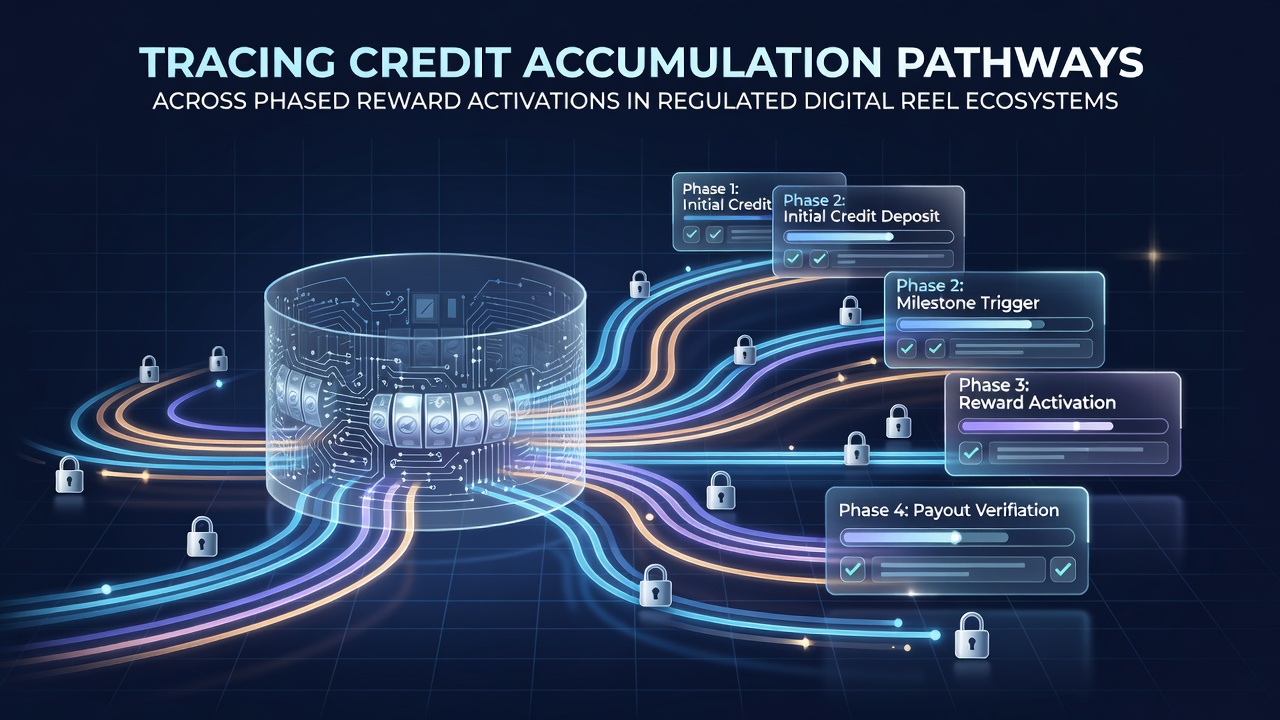
Tracing Credit Accumulation Pathways Across Phased Reward Activations in Regulated Digital Reel Ecosystems
Regulated digital reel ecosystems track credit flows through structured sequences of reward activations that begin with entry-level triggers and extend into sustained accumulation stages, and these systems rely on precise logging mechanisms to ensure each phase contributes measurable value to player balances without overlap or duplication. Operators implement timestamped ledgers that record when a player enters an initial activation phase, such as a base spin sequence, and how those credits convert into layered multipliers before moving forward into secondary phases like progressive pools or timed events.
Entry Phase Mechanics and Initial Credit Routing
Players encounter the first accumulation pathway upon completing registration and verification steps, where systems allocate starter credits that route directly into a dedicated tracking module separate from standard wager balances, and this separation allows regulators to monitor compliance from the outset. Data from the New Jersey Division of Gaming Enforcement shows that entry credits typically activate within seconds of deposit confirmation, triggering an automated audit trail that logs every subsequent spin outcome against the original allocation.
Once entered, these credits move through reel cycles that apply fixed conversion rates, converting raw spins into accumulated points that feed the next activation layer, while algorithms prevent premature payout requests by holding values in escrow until phase completion criteria are met. Observers note that this routing reduces discrepancies reported in quarterly compliance filings across multiple jurisdictions.
Intermediate Accumulation Layers and Conversion Protocols
After the entry phase stabilizes, credit pathways advance into intermediate layers where partial wins from early spins combine with bonus multipliers to form larger pools, and these pools then transition automatically when predefined thresholds appear on the reels. Systems use sequential hashing to maintain integrity, ensuring that credits earned in one layer cannot retroactively alter values assigned to prior stages.
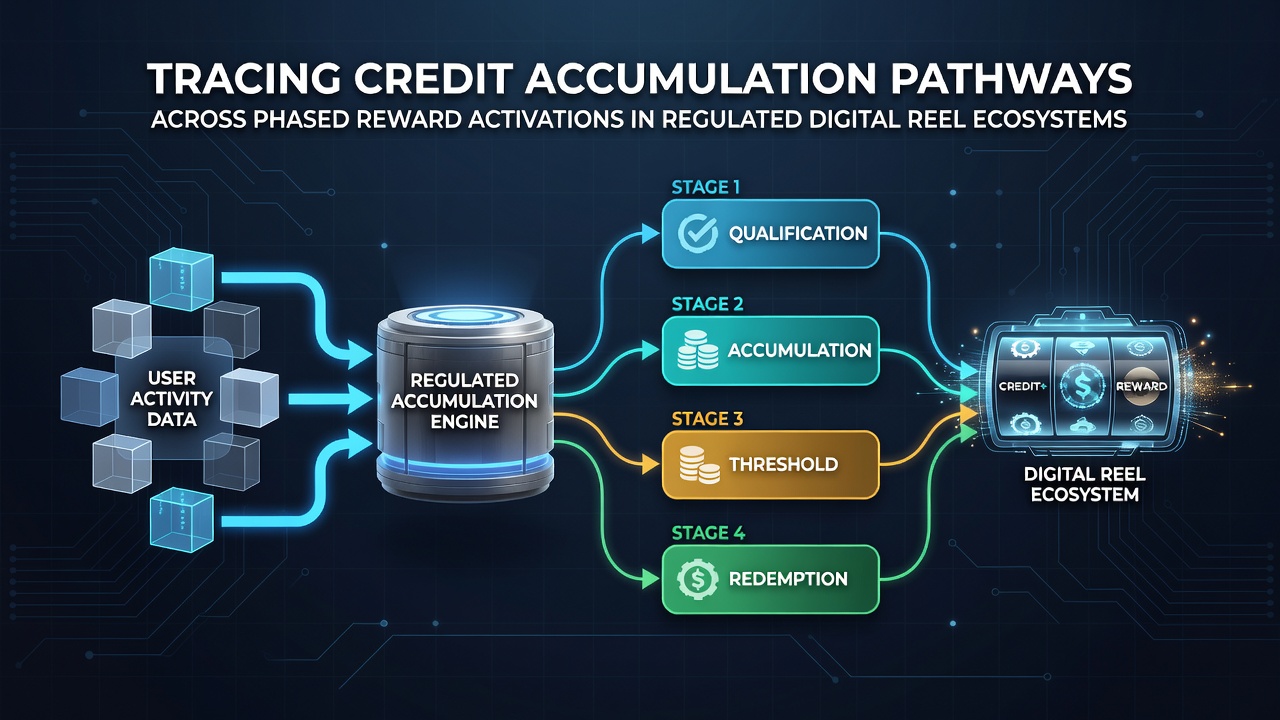
Researchers at the University of Nevada, Las Vegas documented how intermediate protocols in 2025 handled over 12 million tracked activations monthly, with conversion rates averaging 1.8 times the base input when players reached the second tier. The process incorporates real-time reconciliation that cross-checks against central servers operated by licensed providers, and this step minimizes errors during high-volume periods such as weekend peaks in August 2026.
Final Activation and Payout Integration
Final phases consolidate accumulated credits into withdrawable balances after all activation conditions resolve, and regulatory frameworks require operators to maintain immutable records that external auditors can access on demand. Credits reaching this stage pass through validation gates that confirm compliance with stake limits and responsible gaming flags before release, while any residual values loop back into loyalty modules for continued play rather than immediate cashout.
Industry reports from the European Gaming and Betting Association highlight that final integration pathways now incorporate biometric checkpoints in several markets, adding an extra verification layer that aligns with broader consumer protection standards. Those who monitor these flows report fewer disputes when pathways include clear visual indicators on screen showing progress through each phase.
Cross-Jurisdictional Variations in Pathway Design
Different regions apply unique constraints on how phased activations accumulate credits, with some requiring mandatory cooling periods between layers while others emphasize instant transitions for verified accounts. Australian regulatory data indicates that pathways incorporating mandatory pauses recorded 23 percent fewer rapid-cycle claims compared to systems without such intervals, and operators adjust their software accordingly to meet local licensing conditions.
Systems in North American markets often integrate with statewide databases that share accumulation histories across properties, preventing players from circumventing phase limits by switching platforms, and this interconnected approach supports consistent enforcement without disrupting the core reel experience.
Conclusion
Tracing credit accumulation pathways across phased reward activations reveals a tightly coordinated process that balances player engagement with regulatory oversight in digital reel environments. Each stage builds upon the last through verified logging and conversion rules that maintain transparency from initial entry to final payout, and ongoing refinements continue to strengthen these mechanisms as new compliance tools emerge. The structure supports sustained operations while delivering verifiable outcomes across varied regulatory landscapes.